

Tents 2026: The Ultimate Outdoor Guide
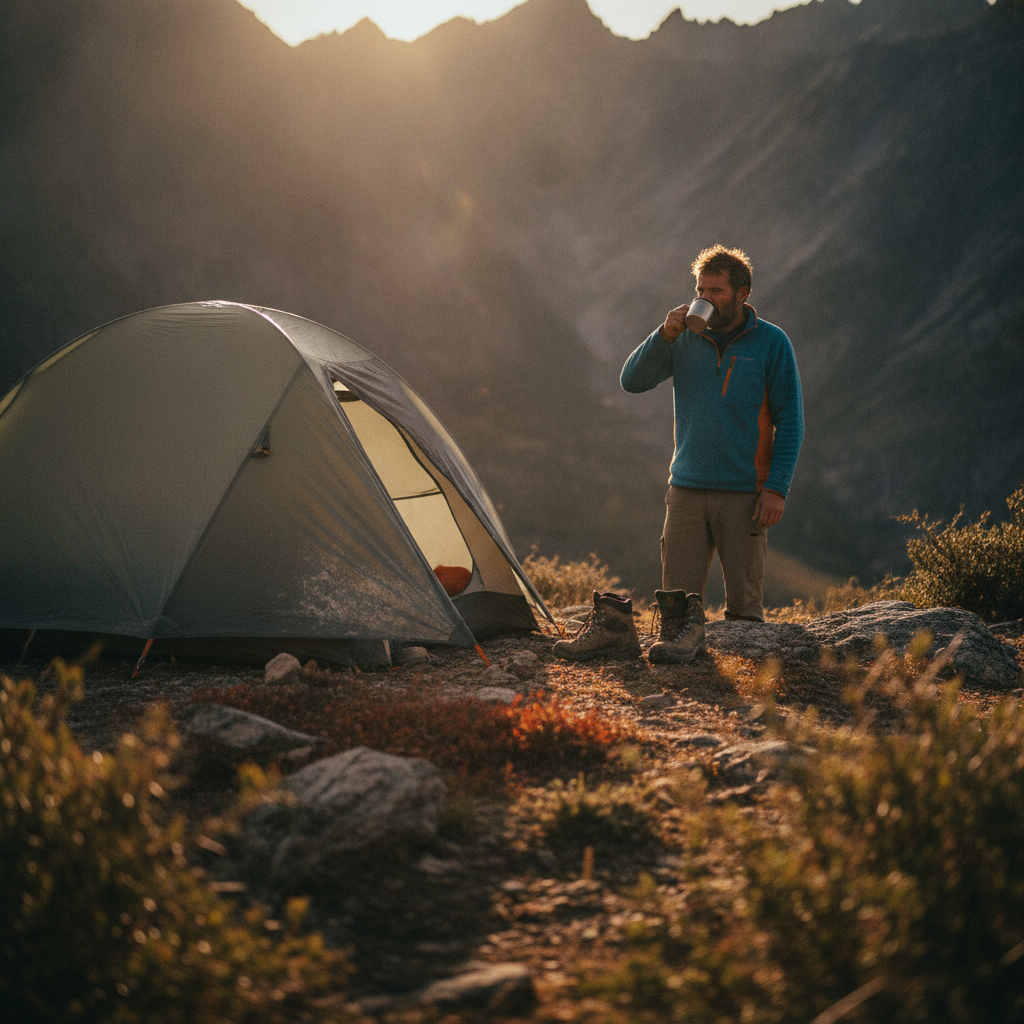
2026 Tents: The Ultimate Outdoor Guide
Hello, adventurers! If you're one of those who feel the call of the mountains, the forest, or the riverbank, you'll know that having good gear is key to making the most of it. And, without a doubt, among that essential equipment, tents hold a place of honor. It's not just a piece of fabric; it's your portable home, your safe haven from the elements, your corner of peace after an exhausting day of hiking, trekking, mountaineering, climbing, camping, or survival.
Choosing the right tent can make the difference between an unforgettable experience and a bad memory. Think of the icy wind of the Picos de Europa, the torrential rain in the Sierra de Gredos, or the suffocating heat in the Monegros. Each scenario requires a specific solution, and we are here to guide you to the perfect choice. Because in 2026, the outdoor world continues to evolve, offering increasingly lighter, more resistant, and more functional options to ensure your adventures are always a success.
How to Choose the Best Tent for Your Adventure
Selecting the ideal tent is like choosing a good travel companion: it must be reliable, adapt to your needs, and cause no problems. There are several crucial factors you should consider before making a decision. Don't rush, every detail counts.
Capacity: How many of you are there and how much gear do you have?
Tents are classified by the number of people they can accommodate: 1, 2, 3, or more. But beware, a "two-person" tent often means two people very close together with little room for gear. If you value comfort or need to store bulky trekking backpacks, consider a tent for one more person than you actually are. For example, a 3-person tent for two people might be perfect.
Weight: Every gram counts in your backpack
If your adventure involves carrying the tent for long hours, such as in trekking or mountaineering, weight is critical. Ultralight tents are wonderful, but they often sacrifice some space or durability. Balancing weight and performance is essential. For a quick and light getaway, something like the 2-MAN CURTAIN could be an interesting, compact, and functional option.
Weather Resistance: What weather do you expect?
This is where material quality comes into play. A high-mountain tent will need a much higher water column (waterproofness) and a more robust structure to withstand strong winds and snowfalls than a tent for summer camping. Look for heat-sealed seams, ripstop fabrics, and good quality aluminum poles. UV protection is also a plus if you're going to spend many hours in the sun.
Ease of Assembly: Do you want to spend hours setting up camp?
After a long day, the last thing you want is to struggle with tent setup. Modern models are usually very intuitive, with color-coded poles and quick-clip systems. Practice at home before heading out to avoid unpleasant surprises in the middle of nature, especially if it gets dark or the weather worsens.
Activity Type: A tent for every adventure
A tent for an alpine base camp is not the same as one for a fishing weekend. For family camping, a spacious tent with several rooms and standing height is ideal. For extreme expeditions, resistance and lightness will be prioritized. The versatility of some models, which allow for configuring different spaces or removing parts to lighten the weight, is a plus.
Types of Tents: From Ultralight to Family Shelter
The tent market is vast and offers solutions for every type of adventure. Knowing the characteristics of the main types will help you narrow down your search and find that perfect shelter.
Tunnel Tents: Space and Comfort
Tunnel tents are recognizable by their elongated shape and parallel arches. They are excellent for offering a large interior space and a good vestibule for storing gear. They are relatively easy to assemble, and if well anchored, can withstand moderate winds. They are ideal for long trekking backpacks where comfort and space for equipment are valued. However, their resistance to side winds can be a weak point if not oriented correctly.
Dome Tents: Stability and Ease
Dome tents are the most popular and versatile. Their cross-arch structure gives them excellent stability against wind and snow. They are usually freestanding, meaning they stand up without the need for stakes, ideal for rocky terrain. They are easy to assemble and disassemble, and there are models for all seasons, from the most basic for summer to the most robust for winter. They are a safe bet for most outdoor activities.
Geodesic and Semi-Geodesic Tents: For Extreme Conditions
When things get serious, geodesic tents come into play. With multiple crossing points in their poles, they distribute tension very efficiently, offering maximum resistance to hurricane-force winds and heavy snow loads. They are the standard for high-mountain expeditions and extreme climates. Semi-geodesic tents offer a good balance between stability and weight, being a lighter but very capable option. If your destination is the Andes or the Himalayas, this is your choice.
Bivy Sacks and Ultralight Tents: Minimize to the Max
For those looking for maximum lightness and minimal volume, bivy sacks are the solution. They are basically waterproof and breathable bags that cover the sleeping bags. They offer basic protection against wind and rain. Ultralight tents, on the other hand, are complete tents but built with advanced materials and minimalist designs to reduce weight to the maximum. Ideal for fast & light routes or where every gram counts. They are usually for one or two people and their comfort is more limited, but the freedom they offer is priceless.
Essential Accessories for Your Tent and Camping
A tent is just the beginning. For your outdoor experience to be complete and safe, you will need some key accessories to complement your shelter and make your life easier in nature. Think of each element as a piece of a puzzle that prepares you for any eventuality.
Sleeping Bags and Insulated Sleeping Pads: The Warrior's Rest
A good tent is useless if you don't sleep well. A sleeping bags suitable for the expected temperature is essential. Choose between down (lighter and more compact) or synthetic fiber (more resistant to moisture and easy to care for) and pay attention to its comfort temperature. Complement it with a good insulated sleeping pad, whether inflatable or foam. It will not only give you comfort but also insulate you from the cold ground, a crucial factor in preventing hypothermia.
Lighting: Don't let darkness catch you
A quality headlamp is a basic. It will allow you to have your hands free to cook, set up the tent, or look for something in your backpack. Also consider a small camping lantern or tent light, which provide a more diffuse and ambient light for the inside of the tent. Rechargeable or dynamo options are increasingly popular and ecological.
Repair Kits: Better safe than sorry
A tear in the fabric or a broken pole can ruin a trip. Always carry a small repair kit for your tent: self-adhesive patches, fabric glue, a needle and strong thread, and electrical tape. If your mountain boots suffer, you can also fix them. Knowing how to fix a small breakdown will save you from more than one tight spot and extend the life of your equipment. Don't forget a basic first aid kit, safety first!
Survival and Safety Equipment: For unforeseen events
In addition to the tent, it is crucial to carry items that guarantee your safety. A strong rope, like the 30FT SAFETY ROPE, can be multi-purpose: for hanging clothes, securing the tent, or even in an emergency situation. A whistle, a signal mirror, a multi-tool knife, a lighter or waterproof matches, and a map and compass (in addition to GPS) are essential. If you are hunters or fishermen, remember that specific equipment, such as a Tactacam Solo/5 0 Viewer Adapter or a Swarovski Optik TLS APO ATX/STX Photographic Adapter, can also be key to your activity, but always prioritizing safety and survival.
Hiking Poles: Extra support
Although not a direct tent accessory, hiking poles are a perfect ally for the mountaineer. They reduce impact on the knees, improve balance, and can even be used to set up some types of ultralight tents that don't have their own poles. A good pair of poles is an investment in comfort and health.
Get Ready for Adventure with the Perfect Tent
As you've seen, choosing the right tent is an important decision that requires considering your needs, the type of adventure, and weather conditions. From weight and capacity to weather resistance and ease of assembly, every detail counts to ensure your shelter in nature is as reliable as it is comfortable.
Whether you're looking for an ultralight tent for your fastest routes, a robust geodesic tent for the most demanding peaks, or a spacious tunnel tent for family camping, the 2026 market offers options for all tastes and budgets. Always remember to complement your choice with essential accessories: a good sleeping bags, an insulated sleeping pad, a reliable lighting system, and, of course, a repair kit and safety items. Adventure awaits, and with the perfect tent, you'll be ready to face it with full confidence.
Now that you have the keys, it's time to explore! Check out our selection of products at YWHunters and find everything you need for your next outdoor getaway. See you in the mountains!