

How to make fire without a lighter: effective and safe methods
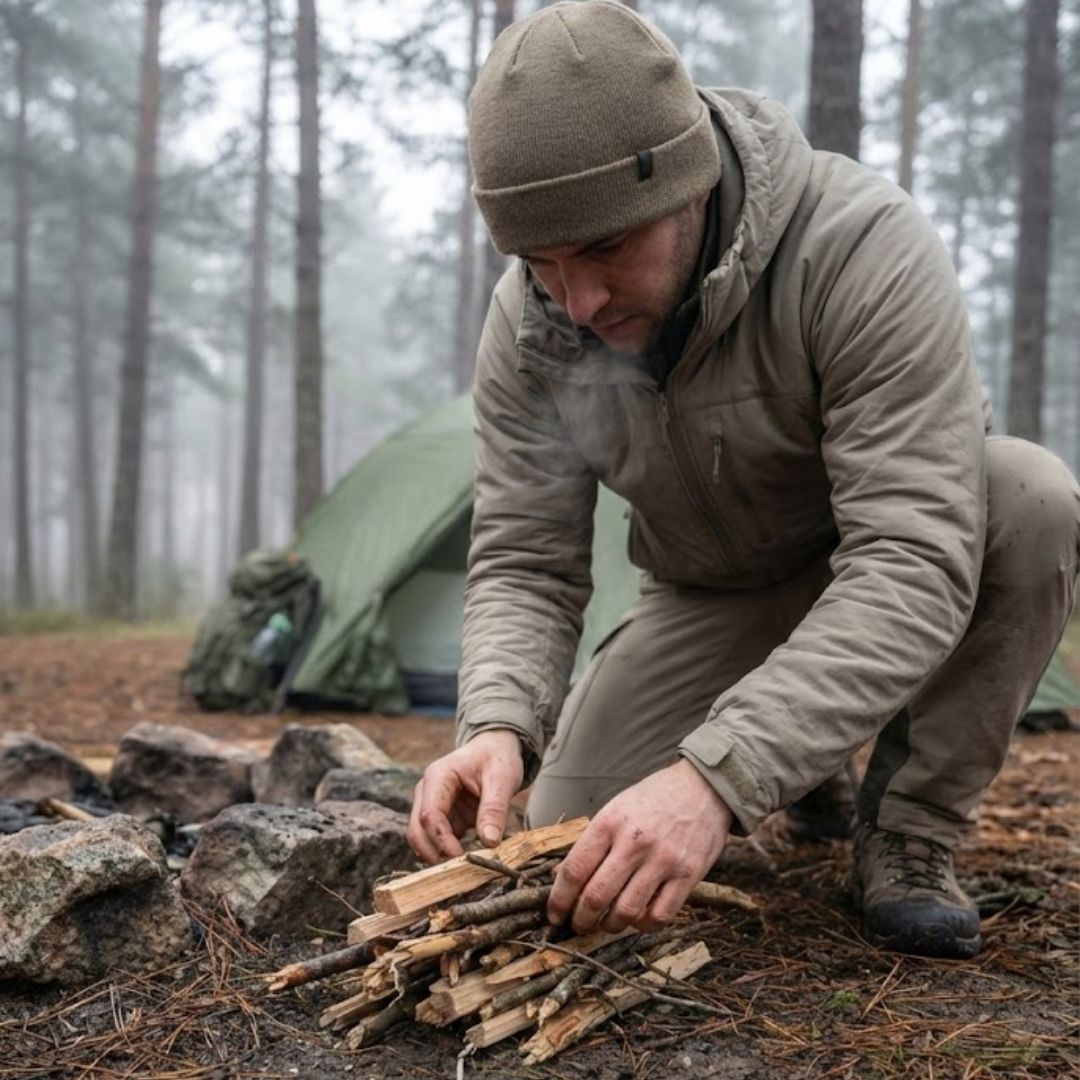
Knowing how to make fire without a lighter is one of those skills that is always useful to know if you spend time in the mountains. Whether on a hiking trip, a hunting day, camping, or an unforeseen situation, fire can provide warmth, light, signaling, and the ability to boil water or cook.
In this guide, we explain real and proven methods for making fire without a lighter, when it makes sense to use them, and, above all, how to do it safely and responsibly, respecting current regulations in Spain.
When and why to make fire without a lighter
We are not talking about starting a fire on a whim. These techniques make sense in specific situations:
-
You have lost your lighter or it has gotten wet
-
The lighter has run out of gas or spark
-
You need heat in an emergency situation
-
You need to boil water to make it potable
-
You need to signal your position
Fire is a survival tool, not entertainment. Knowing how to use it well means knowing when NOT to use it.
Legal aspects and safety in Spain
Before talking about techniques, this is key:
-
In many autonomous communities, it is forbidden to make fire in the mountains for much of the year.
-
In natural parks and protected areas, it is usually forbidden all year round.
-
Penalties for forest fires can be very severe.
If you are ever forced to make a fire in a real emergency situation:
-
Do it in a clear area
-
Clear the ground around it
-
Have water or dirt nearby
-
Never abandon it without extinguishing it completely
The best fire technique is one that does not cause a fire.
Basic material for making fire without a lighter
Before trying to light anything, you need three things:
-
Tinder (material that catches fire easily)
-
Ignition source (spark, heat, friction…)
-
Fuel (thin branches first, then thicker ones)
Without good tinder, no method works.
Examples of tinder:
-
Very dry grass
-
Birch bark
-
Cotton
-
Firelighters
-
Dry resin
Carrying a small survival kit with prepared tinder takes up little space and makes a difference. At Young Wild Hunters, we always recommend being prepared.
Methods for making fire without a lighter
Making fire with flint or ferrocerium
It is the most reliable method without a lighter.
-
Produces very hot sparks
-
Works even when wet
-
Lasts thousands of uses
How it works (generally):
-
Prepare the tinder
-
Strike the ferrocerium to create sparks
-
Direct the sparks to the tinder until it ignites
It is the most recommended option to always carry with you.
Making fire with a magnifying glass or lens
This method uses solar energy by concentrating light at a single point until it generates enough heat for the tinder to start smoking and ignite. It is a simple technique in concept but requires very specific conditions to work correctly.
It only works with direct sun and clear skies, so it is unfeasible on cloudy days, in the rain, or late in the afternoon. Even so, it is an interesting option as a complementary resource when you do not have other ignition systems.
Its main advantages include:
-
Does not consume fuel or parts
-
Is completely silent
-
Does not generate sparks or uncontrolled initial flame
However, it also has clear limitations:
-
Requires patience and a steady hand
-
Depends entirely on the intensity of the sun
-
Needs very fine and dry tinder
It can be done with different objects capable of concentrating light:
-
A traditional magnifying glass
-
Glasses lenses, preferably prescription
-
A camera or binocular lens
To increase the chances of success, it is important to place the tinder in an area protected from the wind and adjust the distance of the lens until the light point is as small and intense as possible. When the tinder begins to smoke, gently blow on it until a flame appears.
In practice, it is not a reliable method as a sole system, but it can get you out of trouble in favorable conditions without the risk of spending other resources.
Making fire with a battery
Using a battery is a valid method in very specific situations, especially when you have a conventional battery (AA or 9V type) and steel wool or other very fine conductive material.
The principle is simple: by closing the electrical circuit between the battery terminals, enough heat is generated to make the steel wool incandescent and quickly ignite the prepared tinder.
This system has several important features:
-
Works even with moderate wind
-
Produces fire almost immediately
-
Does not depend on friction or sun
But it also has drawbacks:
-
Consumes the battery quickly
-
Requires specific material
-
Can cause burns if handled improperly
It is essential to exercise extreme caution. Heat is generated quickly and intensely, so it should only be used as an emergency resource, always with the tinder prepared and the surroundings clear. It should never be improvised without control.
How to make fire with a lighter without a flint
It's a fairly common situation: the lighter still has gas, but the flint or spark system has stopped working. Although the lighter seems useless, the gas is still flammable, which allows you to generate fire if you can get an external spark.
This method consists of:
-
Releasing a small amount of gas
-
Generating a spark with a metallic element or suitable stone
-
Directing the spark towards the gas and tinder
It is not a comfortable or particularly safe system, and it requires care to avoid burns. Therefore, it should only be understood as a temporary solution, not as a primary technique.
In practice, it can get you out of a bind when there is no other alternative, but it does not replace carrying a reliable ignition system in your gear.
How to properly prepare tinder (the key to success)
Most failed attempts at making fire are not due to the chosen method, but to poor tinder preparation. It doesn't matter how many sparks you generate: if the tinder is not suitable, the fire will not light.
Good tinder must meet several conditions:
-
The finer, the better
-
Must be completely dry
-
Must have good ability to ignite with spark or heat
-
Must be prepared before attempting to light
Practical tips:
-
Always prepare more tinder than you think you need
-
Separate it by thickness
-
Store it protected from moisture
The correct fire structure should be:
-
Very fine tinder (cotton, dry fibers, bark)
-
Thin twigs
-
Medium branches
-
Thicker firewood
Never try to light a log or thick wood directly. The fire needs to grow progressively.
Practical tips for successfully making fire
-
Find an area protected from the wind
-
Prepare the entire structure before lighting
-
Don't rush or waste resources without planning
-
Practice techniques in controlled environments
-
Always carry at least two different methods for making fire
In addition to a headlamp, a multi-tool knife, and a small fire kit, a technical cap is also a useful accessory: it protects from the sun while working with tinder, prevents glare, and helps maintain concentration during the process.