



Homemade Survival Kit: How to Make One Step by Step
Title SEO: Meta description:
Having a homemade survival kit is not extreme or paranoid. It's simply about being prepared for unexpected events: prolonged power outages, storms, extended trips to the mountains, or emergency situations where you need basic resources at hand.
In this article, I'll explain how to make a homemade survival kit, what a basic survival kit should include, and how to adapt it to your environment, always with a practical and realistic approach.
Adapting your homemade survival kit to your environment
Not all homemade survival kits need to be the same. The ideal contents depend heavily on where you live and your usual surroundings.
Homemade survival kit in an urban environment
In the city, the most common risks are usually:
-
Prolonged power outages
-
Temporary water shortage
-
Inability to leave the house
In this case, it's advisable to reinforce:
-
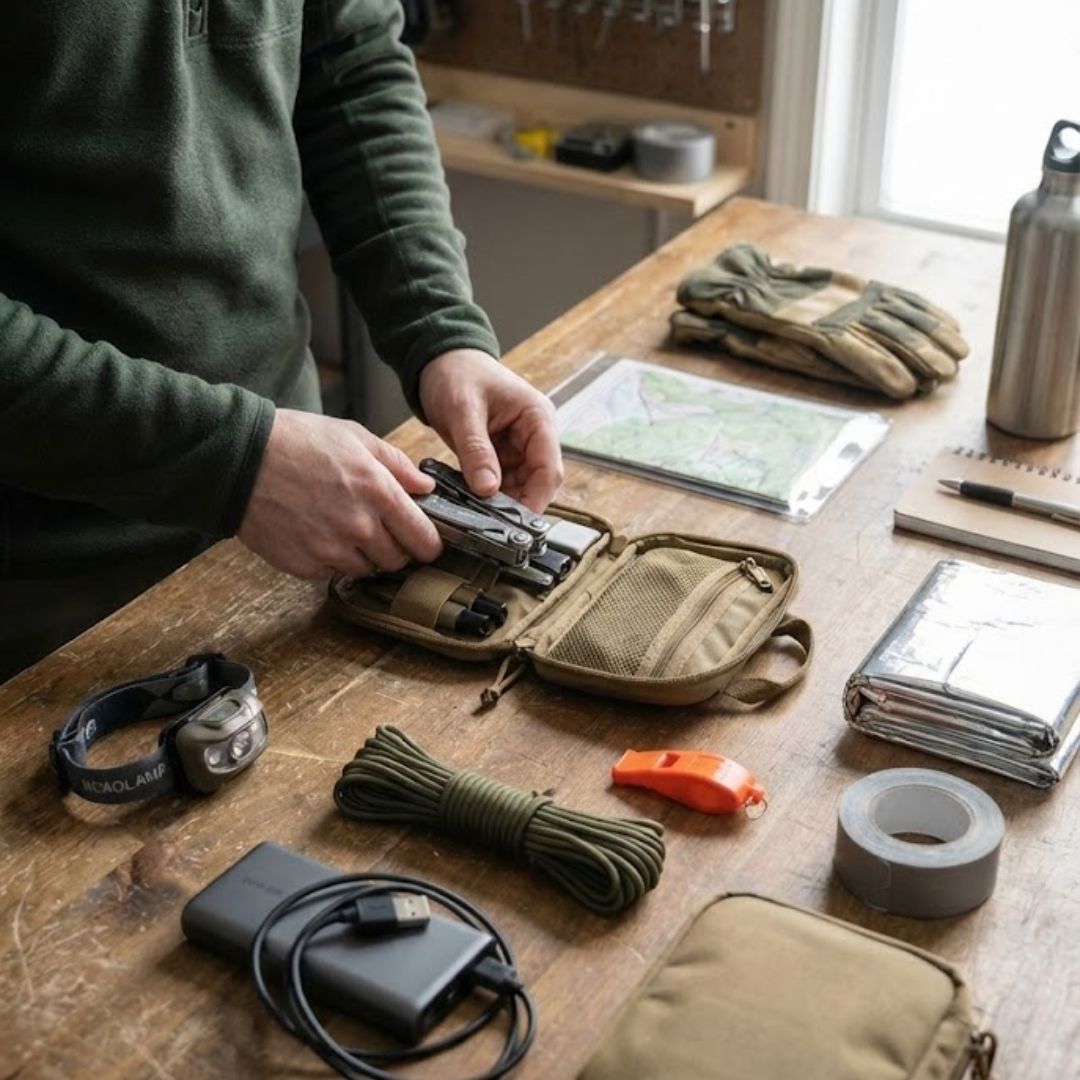
Lighting (headlamp + secondary flashlight)
-
Charged power banks
-
Water and easy-to-prepare food
-
Basic tools like a reliable knife, useful for opening packages, cutting materials, or improvising quick solutions
Other useful items you can add to your homemade survival kit
In addition to the basic contents, there are a series of items that are not always considered, but can make a difference in a real home emergency situation.
Alternative lighting without electricity
When the power goes out, you don't always have charged batteries or power banks.
You can add:
-
Long, stable candles
-
Candle holders or heat-resistant containers
-
Chemical light (glow sticks) for signaling
These systems do not depend on outlets and can provide light for hours.
Add product (flashlights?
Important documents and copies
In an emergency, losing documents can make things much more complicated.
Include in your kit:
-
Copy of ID or passport
-
Health insurance card
-
Insurance policy
-
List of important contacts
-
Relevant medical information
Store everything in a dry bag or waterproof case.
Printed practical information
In stressful situations or without internet access, having information on paper is very useful.
You can include:
-
List of emergency phone numbers
-
Map of your area
-
Basic first aid instructions
-
Action manual for power outages, floods, or snowstorms
It doesn't take up much space and can save you a lot of trouble.
Simple and easy-to-preserve food
You don't need to store food for weeks, but it's good to have some basics.
Recommended options:
-
Ready-to-eat canned goods
-
Energy biscuits
-
Nuts
Choose foods that:
-
Don't require refrigeration
-
Have a long shelf life
-
You can eat even without heating
Why a knife is the key piece of the kit
Many commercial kits fail in the same way: they underestimate the importance of a quality cutting tool. A knife is not an accessory, it's a central tool.
In a homemade survival kit, a good knife allows you to:
-
Prepare food safely
-
Cut bandages, clothing, or rope
-
Prepare tinder for fire
-
Make small repairs
-
Improvise solutions when specific tools are unavailable
That's why it's important to choose:
-
Fixed blade over folding
-
Manageable size
-
Good grip, even with wet hands
-
Easy-to-maintain steel
It's not about having the biggest knife, but the most functional one.
Backpack, box, or bag? How to present your kit
Another common mistake is storing the kit in an impractical format.
Option 1: Backpack
It's the most versatile:
-
Allows for quick evacuation
-
Distributes weight well
-
Ideal if you need to leave home
Option 2: Waterproof box
Good for:
-
Storing at home
-
Protecting from humidity
-
Keeping everything organized
Option 3: Modular kit
Each category in a separate bag:
-
Fire
-
Cutting
-
First aid
-
Lighting
This system makes it easier to quickly find what you need.
Importance of testing the kit before you need it
A kit that is not tested is not reliable.
Recommendations:
-
Use the knife occasionally for real tasks
-
Start a fire with the material you carry
-
Check that the headlamp works
-
Ensure everything is accessible
The first time you use your equipment should not be in an emergency.
Difference between a homemade survival kit and a survival backpack
Although often confused, they are not the same:
-
Homemade survival kit: designed for use from home or as a base
-
Survival backpack: designed for travel and survival for several days
Ideally, have a well-prepared homemade kit and, from it, assemble a lighter backpack if needed.
Mental preparation: the part no one includes
As important as the equipment is the attitude.
A survival kit:
-
Does not replace common sense
-
Does not eliminate risk, it reduces it
-
Works best if you remain calm
Having your equipment ready provides something key: peace of mind. And that, in an emergency, is worth a lot.
Reminder
A good homemade survival kit is not based on accumulating objects, but on:
-
Choosing useful tools
-
Opting for quality
-
Periodically checking the equipment
-
Adapting it to your environment
And within that set, a reliable and functional knife remains one of the most important pieces, especially if you choose models designed for real use like those from Young Wild Hunters.