

Thermal blanket: how to use it correctly and in which situations it is essential
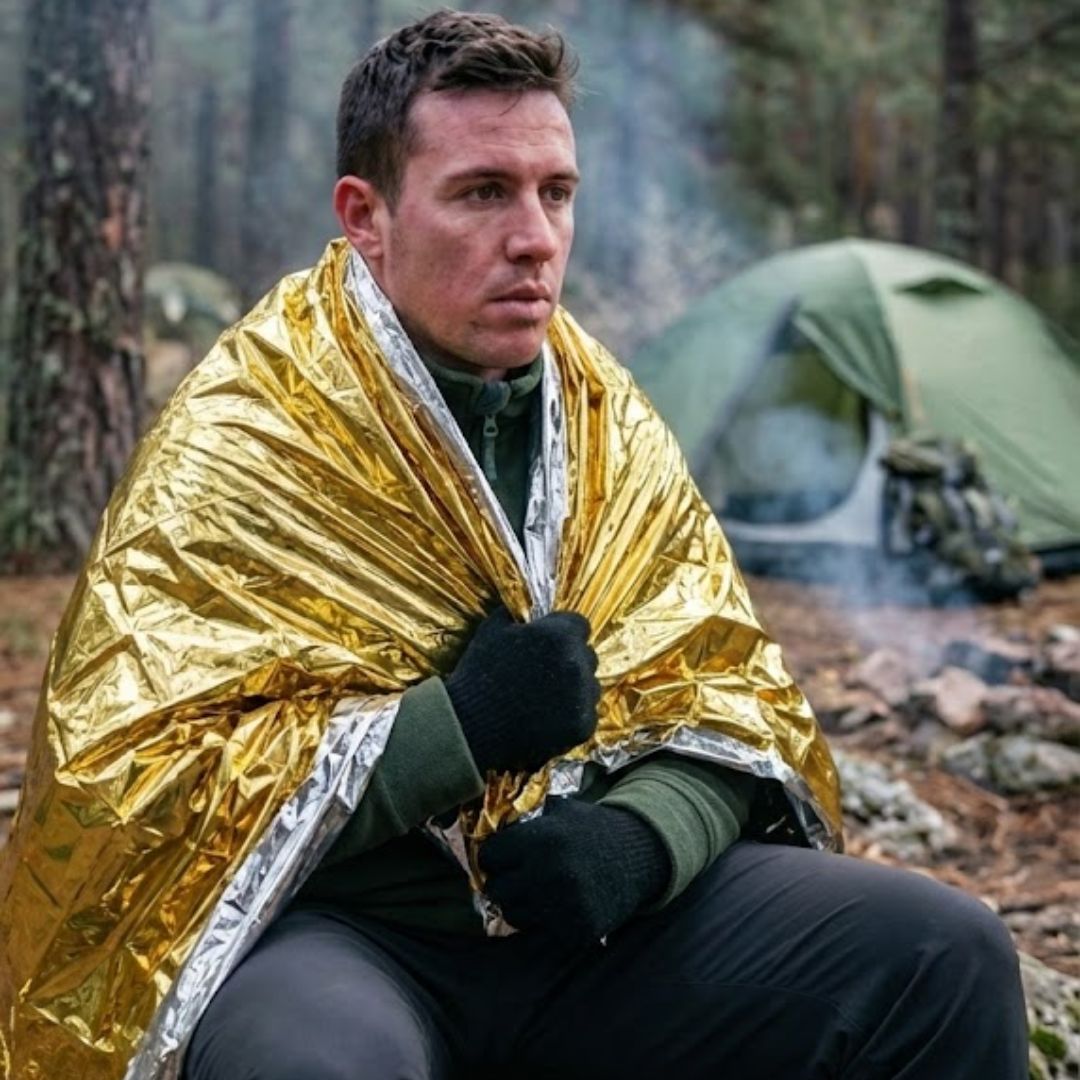
A thermal blanket is one of those items many people carry in their backpack, car, or first aid kit… but few know how to use it correctly. And in a real situation—cold, rain, accident, or emergency—using it incorrectly can significantly reduce its effectiveness.
In this article, we explain how to use a thermal blanket, which side goes out, when it is truly useful, and why it is essential for outdoor activities and emergency kits.
What is a thermal blanket and what is it for?
An emergency thermal blanket (also called an isothermal blanket) is a thin, light, and reflective sheet designed to reduce body heat loss on cold camping nights.
Its main function is to:
-
Retain heat in case of cold or shock
-
Protect from wind and rain
-
Reduce the risk of hypothermia
That's why it is commonly found in:
-
First aid kits
-
Mountain backpacks
-
Hunting and fishing equipment
-
Survival and emergency kits
Thermal blanket: how to use it step by step
Let's get to the important part: the correct use of the thermal blanket.
1. Protect from the ground and wind first
Before wrapping the person:
-
Insulate from the ground (backpack, clothing, dry branches)
-
Seek shelter from the wind if possible
The blanket does not generate heat, it only retains the heat you already have.
2. Wrap the body well
-
Cover the torso, legs, and shoulders
-
Avoid leaving gaps where heat can escape
-
Do not tighten excessively if the person is injured
In case of an accident, handle as little as necessary.
Thermal blanket: which side to use (gold or silver)
This is one of the most common questions: thermal blanket, which side to use.
To retain body heat (cold, hypothermia)
Silver side towards the body
Gold side outwards
This reflects body heat inwards.
To protect from heat or sun
Gold side towards the body
Silver side outwards
The silver side reflects solar radiation and helps keep you cooler.
In Spain, the most common use is against the cold, especially in mountains, hunting, fishing, or night emergencies.
When to use a thermal blanket
The use of the thermal blanket is especially recommended in:
-
Hypothermia or risk of it
-
Accidents with immobilized people
-
Rain, wind, or intense cold
-
Prolonged waiting without movement
-
Power outages, emergencies, or evacuations
When hunting or fishing, a long stop with wet clothing can cool the body faster than it seems.
Common mistakes when using a thermal blanket
Avoid these common mistakes:
-
Thinking it "warms up" by itself
-
Using it without insulating from the ground
-
Incorrectly positioning the reflective side
-
Tearing it by stretching it too much
-
Storing it wet after use
A poorly used blanket loses much of its effectiveness.
How to carry and store a thermal blanket
Practical tips:
-
Always carry it folded in its case
-
It takes up no space and is lightweight
-
Store it in an accessible place
-
If it breaks, replace it (they are practically single-use)
Considering its price and weight, there's no excuse not to carry one.
Thermal blanket in emergency and outdoor kits
The thermal blanket is a key element in:
-
Survival kits
-
First aid kits
-
Hunting and fishing backpacks
-
Mountain equipment
At Young Wild Hunters, you'll find outdoor and survival gear where the thermal blanket fits perfectly as basic equipment, along with flashlights, backpacks, and technical clothing designed for real situations.
Final Recommendations
Knowing how to use a thermal blanket correctly can make a difference in a critical situation. It is a simple, inexpensive, and lightweight item, but it only works well if you know which side to use and how to position it.
Always carry it with you during outdoor activities or in your emergency kit. Hopefully, you will never have to use it, but if the time comes, you will be grateful to know how to use it properly.