



Blackout Survival Kit: What to Include and How to Prepare for a Power Outage
A prolonged power outage is no longer so unthinkable. Storms, grid failures, cyberattacks, or serious emergencies can leave us without light or communication for hours or even days. That's why more and more people are wondering how to assemble a truly useful power outage survival kit.
In this article, we explain what a power outage survival kit should contain, how to prepare it at home with common sense, and what elements make a difference when there's no light, heating, or electricity.
What is a power outage survival kit?
A power outage survival kit is a collection of basic materials designed to maintain safety, communication, and minimal autonomy during a severe power cut.
We're not talking about apocalyptic scenarios, but about being prepared for:
-
Lack of light for hours or days
-
Water or heating cuts
-
Communication problems
-
Difficulty leaving or buying supplies
It is, in practice, a disaster emergency kit adapted to an urban or domestic environment.
What should a power outage survival kit include?
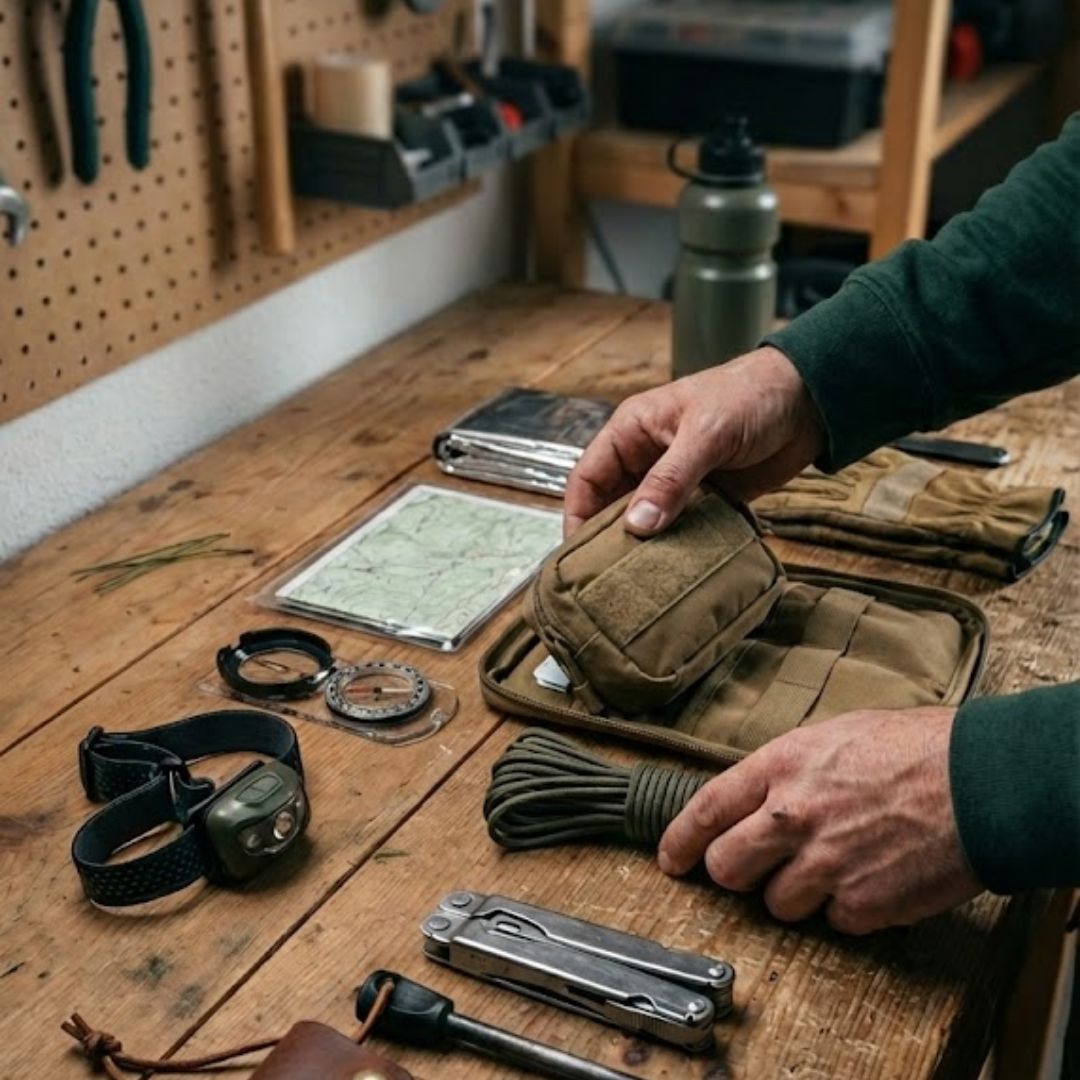
Here's the important part. A good power outage survival kit doesn't need to be huge, but it does need to be well-thought-out.
Light without electricity (essential)
When the power goes out, the first thing you notice is the darkness.
Always include:
-
Powerful LED flashlight
-
Headlamp (hands-free)
-
Candles only as a last resort (fire hazard)
Better option: USB or hand-crank rechargeable flashlights, ideal for light without electricity.
Communication and information
In a large power outage, your mobile phone can run out of battery and lose signal.
Essential:
-
Emergency radio (preferably dynamo or solar)
-
Charged power bank
-
Charging cables
Knowing what's happening greatly reduces stress.
Water and basic food
Although running water usually holds up, it's not always guaranteed.
Recommended:
-
Bottled water (minimum 2 liters per person/day)
-
Non-perishable food:
-
Canned goods
-
Nuts
-
Energy bars
No need to cook: think of ready-to-eat food.
Warmth and shelter
Especially important in winter.
Include:
-
Thermal blankets
-
Warm clothing
-
Gloves and hat
Why is it a good option for processing game meat?
Its drop point blade offers excellent control for fine cuts, ideal for butchering, separating muscle from bone, and working delicate areas without damaging the meat. It's a balanced knife for both beginner hunters and those experienced in field dressing.
The 14C28N steel maintains a stable edge and is easily restored with a sharpening steel, which is key when working on a carcass and lacking more complete sharpening tools.
The compact Kydex sheath, with multiple anchor points, allows it to be kept accessible during butchering without getting in the way or contaminating the meat.
Specifications:
-
Blade: 3.5″
-
Thickness: 2.8 mm
-
Weight: 100–120 g
-
Construction: Full tang
A nighttime power outage can quickly drop the temperature in the house.
Safety and first aid
A disaster emergency kit should account for minor accidents.
Basic:
-
First-aid kit (band-aids, bandages, disinfectant)
-
Personal medication
-
Pocket knife or multi-tool
-
Gloves
Where to store the survival kit
The typical mistake is to have everything scattered.
Practical tips:
-
Use a durable backpack or box
-
Store it in an accessible place
-
Inform the whole family where it is
-
Check the contents every 6–12 months
Recommended equipment for your survival kit
This is where it's wise to opt for reliable equipment, similar to what we use for hunting, fishing, or outdoor activities.
At Young Wild Hunters, you can find very useful categories for this type of kit:
-
Tactical and headlamps
-
Durable backpacks
-
Versatile outdoor accessories
-
Thermal technical clothing
It's not about buying for the sake of buying, but about choosing durable gear, designed for real situations.
Common mistakes when preparing a blackout kit
Avoid these common mistakes:
-
Relying solely on your mobile phone for light
-
Not having charged batteries
-
Forgetting enough water
-
Using candles without safety precautions
-
Not testing the material beforehand
A kit you haven't tested is not a reliable kit.
Final Recommendations
Having a power outage survival kit prepared is not alarmism, it's smart prevention. Just as we carry the right equipment in the mountains in case something goes wrong, at home it's wise to be prepared for being without light or electricity.
With little money and some planning, you can assemble a disaster emergency kit that will give you peace of mind and autonomy when you need it most.