


Chamois, "the princes of the mountains"
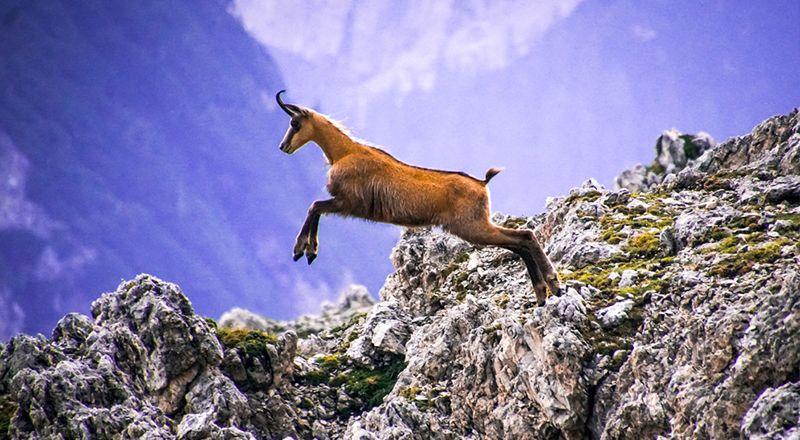
Majestic creatures that inhabit the highlands of mountain ranges, chamois are known as the “princes of the mountains” for their grace, strength and dominance over their rugged territory. With their distinctive spiral antlers and coats adapted to the alpine environment, these ungulates are symbols of wildlife in the mountainous regions of Europe, Central Asia and North America. Their ability to survive in extreme conditions and their deft ability to climb steep slopes give them an aura of nobility among the inhabitants of the highest peaks.
These magnificent high-altitude dwellers are not only admired for their beauty and grace, but also for their crucial role in mountain ecosystems. As specialised herbivores, chamois play a key role in controlling alpine vegetation, helping to maintain the ecological balance in their habitat. Their resilience to harsh climatic conditions and ability to find food in difficult terrain make chamois an iconic species, whose presence on snowy peaks is a reminder of the tenacity and beauty of wildlife in the world's mountain regions.
Subspecies in our Peninsula
Chamois are moderately sized creatures, masterfully adapted to the adversities and challenges of high-altitude mountain terrain, where they can live up to two decades. They range in body size from 110 to 130 centimetres in length, with a height at the withers of 70-80 centimetres, and a weight of around 20-30 kilograms, with the males being slightly larger, especially those residing in the Pyrenees.
Both sexes of these animals have antlers and have a similar morphology, resulting in little sexual dimorphism. The horns, erect and with hooked tips, are somewhat larger and more closed at the top in males. A notable characteristic of chamois is their keen vision and sense of smell, always positioning themselves at high points from which they can keep watch for potential dangers and predators, such as wolves, eagles and bears.
There are two subspecies in Spain: the Pyrenean (R. pyrenaica pyrenaica) and the Cantabrian (R. pyrenaica parva). The Pyrenean chamois, also called the sarrio, is larger, has thicker and longer horns, and is yellowish in summer and dark grey in winter.

Pyrenean chamois

Cantabrian chamois
Chamois hunting
Chamois stalking is the main modality in high mountain hunting, due to its difficulty and the beautiful landscapes. Chamois hunting requires the hunter to be in good physical condition and be skilled with a weapon. Shots are fired at an average distance of about 200 metres. Chamois are not one of the species that allow us to get too close, although there are also some hunting grounds that allow us to walk a little closer, depending on the time of year.
The chamois hunting season varies according to the region and local laws, generally coinciding with the autumn and winter months, when chamois are in the mating season and weather conditions are more conducive to hunting. It is crucial to check the specific regulations of each area before embarking on this adventure.
You can see our experience hunting chamois in this video:
Recommendations for your hunting
If you are planning a chamois hunt, it is crucial to follow certain recommendations to ensure a safe and nature-friendly experience:
Know local regulations: Research and familiarize yourself with the hunting laws and regulations in the area where you plan to hunt. Make sure you obtain all necessary permits and respect any posted hunting limits.
Physical preparation: Chamois hunting often involves rugged terrain and challenging weather conditions. Make sure you are physically fit and prepared to walk long distances over difficult terrain.
Proper Equipment: Use high-quality equipment, including binoculars, clothing and footwear appropriate for the weather and mountainous terrain, as well as an appropriate, well-maintained weapon.
Respect for the environment: Respect the natural habitat of the chamois and avoid disturbing other animal species during your hunt. Pick up any rubbish you generate and leave the environment as clean as you found it.
Hunting ethics: Select your targets carefully and aim for mature and healthy chamois. Avoid reckless or long-range shots that may injure the animal unnecessarily.
