
 Visión térmica
 Visión nocturna
 Chalecos
 Pantalones
 Botas de caza
 Protección auditiva
 Cámaras de fototrampeo
 Multiherramientas
 Arco y ballesta
 Taxidermia
 Carne de caza

 Accesorios
Airsoft Tactical Vests: The Complete 2026 Guide for Epic Games

Airsoft Tactical Vests: The Complete 2026 Guide for Epic Games
Hey there, fellow trench-dwellers! Are you ready to take your airsoft games to the next level in 2026? If you're someone who enjoys adrenaline, strategy, and quality gear, you'll know that airsoft is much more than just a game: it's a passion, a way of life. And within this exciting world, there's one element that makes the difference between a rookie and a true operator: tactical vests. We're not talking about a simple accessory, but the heart of your equipment, the pillar that supports your operational capability on the battlefield.
In this article, we're going to dive deep into the universe of airsoft tactical vests. From their vital importance to how to configure them so they become an extension of your own body, passing through the different types and the essential accessories. Get ready to discover how a good vest not only improves your gaming experience but also provides you with an incalculable strategic advantage. Let's get to it!
Why is a Tactical Vest Essential in Airsoft?
Look, I know what many of you are thinking: "Do I really need a tactical vest? Can't I just carry my magazines in my pockets?" And the answer is a resounding NO. A good tactical vest is not a whim; it's an imperative necessity if you want to perform at your best in every game. Imagine the scene: you're in the middle of an assault, you need to change magazines quickly, and your hands are fumbling in crowded pockets. The result? Lost time, unnecessary exposure, and probably an "Eliminated!" that takes you out of the action.
This is where the magic of tactical vests comes into play. They are designed to organize your military equipment and your airsoft accessories ergonomically and accessibly. Think of them as your personal "operations center." Every magazine, every grenade, every radio, even your water bottle, has its specific place, within reach. This not only gives you a brutal tactical advantage by reducing reloading times and access to your gear, but also allows you to move with greater agility and comfort. A well-fitted vest distributes the weight of your tactical clothing and your airsoft protection evenly, preventing fatigue and allowing you to maintain concentration on what really matters: the game.
Furthermore, let's not forget the protection factor. Although they are not designed to stop real projectiles, many tactical vests offer an additional layer against airsoft BB impacts, especially in the torso, where you usually carry your airsoft replicas and other items. And let's be honest, is there anything cooler than a well-equipped operator with a tactical vest configured down to the last detail? Aesthetics, although secondary, also play their role in immersion and enjoyment of the game. In short, a tactical vest is not just a magazine carrier; it's a tool that improves your efficiency, comfort, and safety in the field.
Types of Tactical Vests: Choose the Ideal One for Your Playstyle
The tactical vest market is as varied as the playstyles in airsoft. There isn't one "perfect" vest for everyone; the ideal one for you will depend on your role in the team, the amount of gear you need to carry, and, of course, your personal comfort. Let's break down the most common types so you can choose wisely:
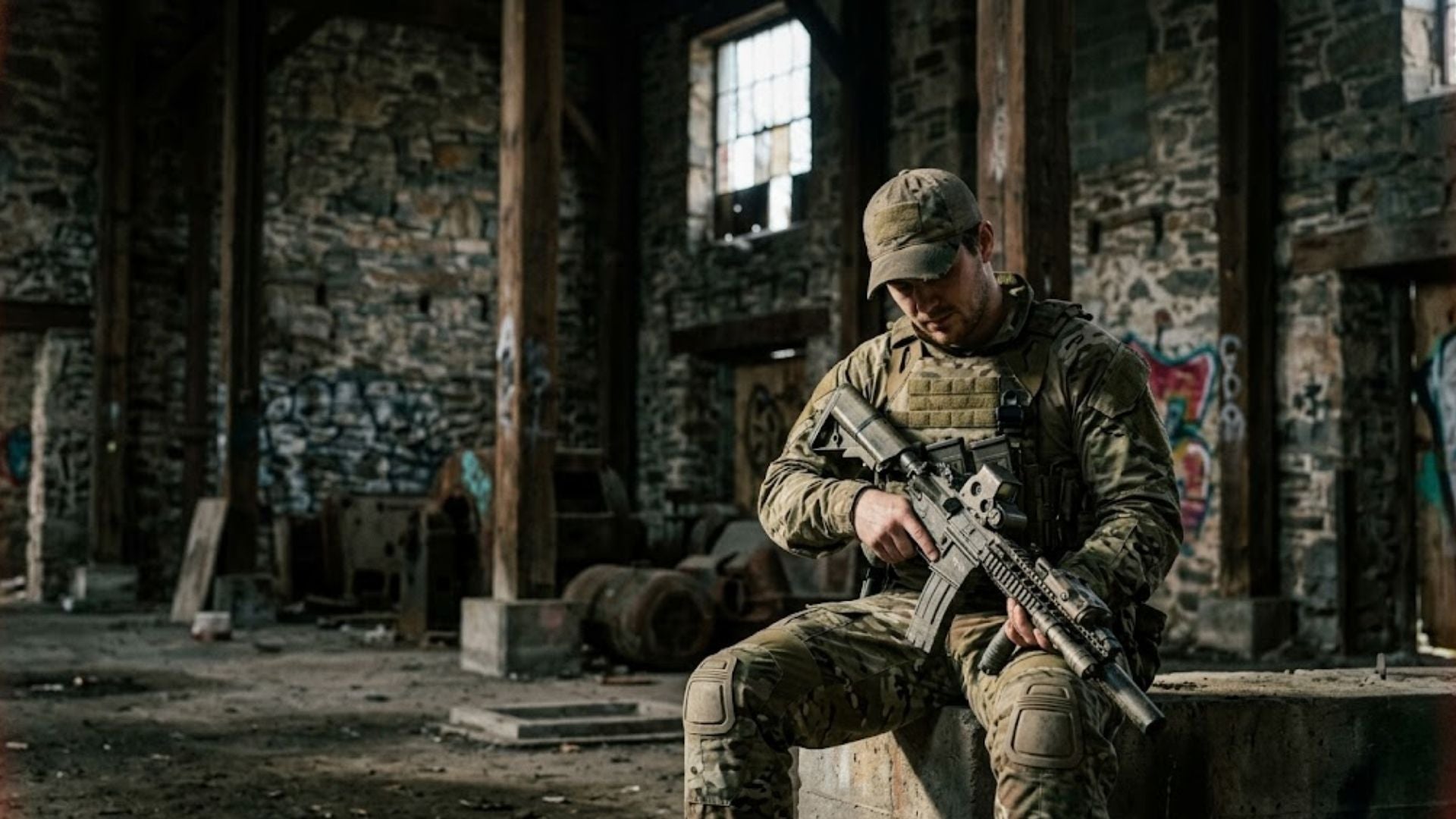
- Plate Carriers: These are the kings of protection and modularity. They mimic military body armor and are designed to carry ballistic plates (in our case, foam or plastic replicas). Their main advantage is extreme customization thanks to MOLLE (Modular Lightweight Load-carrying Equipment) systems. You can add or remove pouches, holsters, and other airsoft accessories wherever you want. They are ideal for assault roles, support roles, or those looking for maximum carrying capacity and a more robust silhouette. However, they tend to be heavier and bulkier.
- Chest Rigs: As their name suggests, they focus on the front part of the torso. They are lighter and more minimalist than plate carriers, perfect for operators who prioritize agility and low visibility. They usually have fixed compartments for magazines and some utility pouches, although modern models also incorporate MOLLE systems. They are excellent for reconnaissance roles, snipers, or those who only need to carry the essentials (magazines, radio, a grenade). They allow great freedom of movement and are cooler in warm climates.
- Assault Vests or Full Tactical Vests: These are the "traditional" vests, which cover a large part of the torso and often include shoulder pads. They usually have integrated pockets and compartments, with less modularity than plate carriers, but more than chest rigs. They are an intermediate, versatile, and often more economical option. Some come with integrated hydration systems or radio pouches. They are a good option for beginners or for those looking for an "all-in-one" solution without getting too complicated with MOLLE configuration.
- Lightweight Modular Vests (Micro Rigs): The minimalist evolution of chest rigs. They are designed to carry only what is strictly necessary: two or three magazines, a radio, and little else. They are incredibly light and discreet, ideal for CQB (close-quarters battle) or for players who want maximum agility and speed. They can often be combined with small plate carriers to add some front protection.
When choosing, think about your role. Are you an assaulter who needs to carry many magazines and grenades? A plate carrier is your friend. Are you a sniper who wants to go unnoticed? A chest rig or micro rig will suit you perfectly. Try different options, adjust the straps well, and make sure it allows you to move with complete freedom. The key is comfort and functionality adapted to your playstyle.
How to Configure Your Tactical Vest for Maximum Performance
Once you have your tactical vest, the real magic begins with its configuration. It's not just about hanging pouches randomly; it's a science, about optimizing ergonomics and accessibility so that every movement is instinctive and efficient. Here's a guide to help your vest become a lethal extension of your body:
1. The Golden Rule: Accessibility and Priority
Everything you need quickly (magazines, secondary replica, grenades) should go on the front and side, within reach of your dominant and non-dominant hand. Less critical items (water, tools, maps) can go on the back or in harder-to-reach pouches. Think of a hierarchy: the most important, the most accessible.
2. Magazines: The Heart of Your Firepower
Your airsoft replica magazines come first. Most operators place primary magazines (for the main replica) on the front of the vest, in the abdomen or chest area. You can opt for open pouches for quick extraction, or closed ones for greater security. A trick: some players place the magazines with the bullet facing down to facilitate extraction and insertion into the replica. Make sure you can extract and reload them without looking, with a fluid motion. For your secondary replica (pistol), the holster should go on the hip or thigh for quick, unhindered access.
3. Utilities and Airsoft Protection
This includes everything: radio pouches, IFAK (Individual First Aid Kit), tools, spare battery. The radio usually goes on the non-dominant side, so the headphone cable doesn't interfere when aiming. The first aid kit, while hopefully not needed, should be accessible to you and your teammates in an emergency. Consider specific pouches for your smaller airsoft protection, such as spare ballistic goggles or mouthguards.
4. Hydration and Survival
A camelback or canteen on your back is essential, especially during long games. Make sure the camelback tube is accessible and doesn't snag. For items like maps, compasses, or small tools, a utility pouch on the front-side is ideal. If you use any recording or viewing device, such as the Tactacam Solo/5 0 Visor Adapter, make sure you have a safe and accessible place for its transport and use.
5. Balance and Fit
Distribute the weight evenly. An unbalanced vest will tire you faster and make you less agile. Adjust the shoulder and side straps so that the vest fits snugly against your body, but without restricting movement or breathing. It should move with you, not bounce or slide. Practice basic movements (running, crouching, reloading) with the vest on and loaded to identify friction points or discomfort.
Remember, configuration is personal. What works for one may not work for another. Experiment, try different arrangements, and don't be afraid to change things until you find your perfect setup. Your tactical gear should be an extension of yourself.
Essential Accessories for Your Airsoft Tactical Vest
A tactical vest is like a blank canvas; accessories are the colors that give it life and functionality. Choosing the right ones is crucial for optimizing your performance on the field. Here's a list of items that are a must-have in your gear:
- Magazine Pouches: Obvious, but essential. The choice between open pouches ("fast mag" type) or closed ones with a flap will depend on your preference for quick extraction versus magazine security. Ideally, have a combination. Make sure they are compatible with the type of magazine for your airsoft replica.
- Holster (Pistol Holster): If you carry a secondary replica, a holster is indispensable. It can be a leg (drop-leg), belt, or directly mounted on the vest (although this can limit mobility). Look for one that offers secure retention and quick, fluid access.
- Utility/Admin Pouch: These are those multipurpose pockets that save the day. Ideal for carrying tools, flashlights, spare batteries, maps, compasses, or even small snacks. An admin pouch on the upper front part of the vest is perfect for small, flat items.
- Radio Pouch: Maintaining communication is vital. A specific pouch for your radio will protect it and keep it accessible. Make sure it has good retention and allows you to manipulate the buttons without difficulty.
- Hydration Pouch (Camelback): In long games or hot climates, dehydration is a silent enemy. A camelback on your back, with a capacity of 1.5 to 3 liters, is an investment in your endurance and health.
- Medical Pouch (IFAK): Although airsoft is a game, small accidents can happen. A basic first aid kit with bandages, disinfectant, band-aids, and painkillers is a smart precaution. It should be easily identifiable and accessible, both for you and a teammate.
- Grenade Pouch or Replica Grenades: If you use smoke, sound, or fragmentation grenades (airsoft replicas, of course), you will need specific pouches to carry them safely and accessibly.
- D-Rings or Tactical Carabiners: Small but useful. They allow you to hang gloves, safety glasses, or even your 30FT SAFETY ROPE to secure your position or for simulated rescue situations.
When choosing accessories, prioritize quality and compatibility with your MOLLE system. Don't skimp on elements that could affect your safety or performance. A good accessory can make all the difference on the playing field.
Conclusion: Your Tactical Vest, Your Advantage in the Field
Well, there you have it, comrades. We've explored the fascinating world of airsoft tactical vests, and I hope you now have a much clearer understanding of why they are such a crucial component of your gear. A vest is not just a piece of fabric; it's a piece of engineering designed to optimize your operational capacity, your safety, and ultimately, your enjoyment in every game.
From the impeccable organization of your magazines and airsoft accessories to the additional protection it offers, as well as the possibility of adapting your tactical clothing to any role or scenario, tactical vests are the heart of your strategy on the field. Investing in a good vest and configuring it perfectly is investing in your performance, your comfort, and the intensity of every experience.
So, if you don't have yours yet or if you feel that the one you have isn't up to par, I encourage you to explore the options. Visit our store at YWHunters and discover the wide range of tactical vests and accessories we have for you. A good vest is an investment that pays off in every epic game, in every objective achieved, and in every victory. See you on the field, operators!